Jinhua Ritop Steel Cabinet Co., Ltd. exhibited at ARAB LAB LIVE 2026 in Dubai, from 26 to 28 October, at booth SSH1-E71. The stand carried the P2 PP fume hood, a drug cabinet and two hazardous storage cabinets, with the hood running live and the cabinet locks demonstrated in front of visitors.
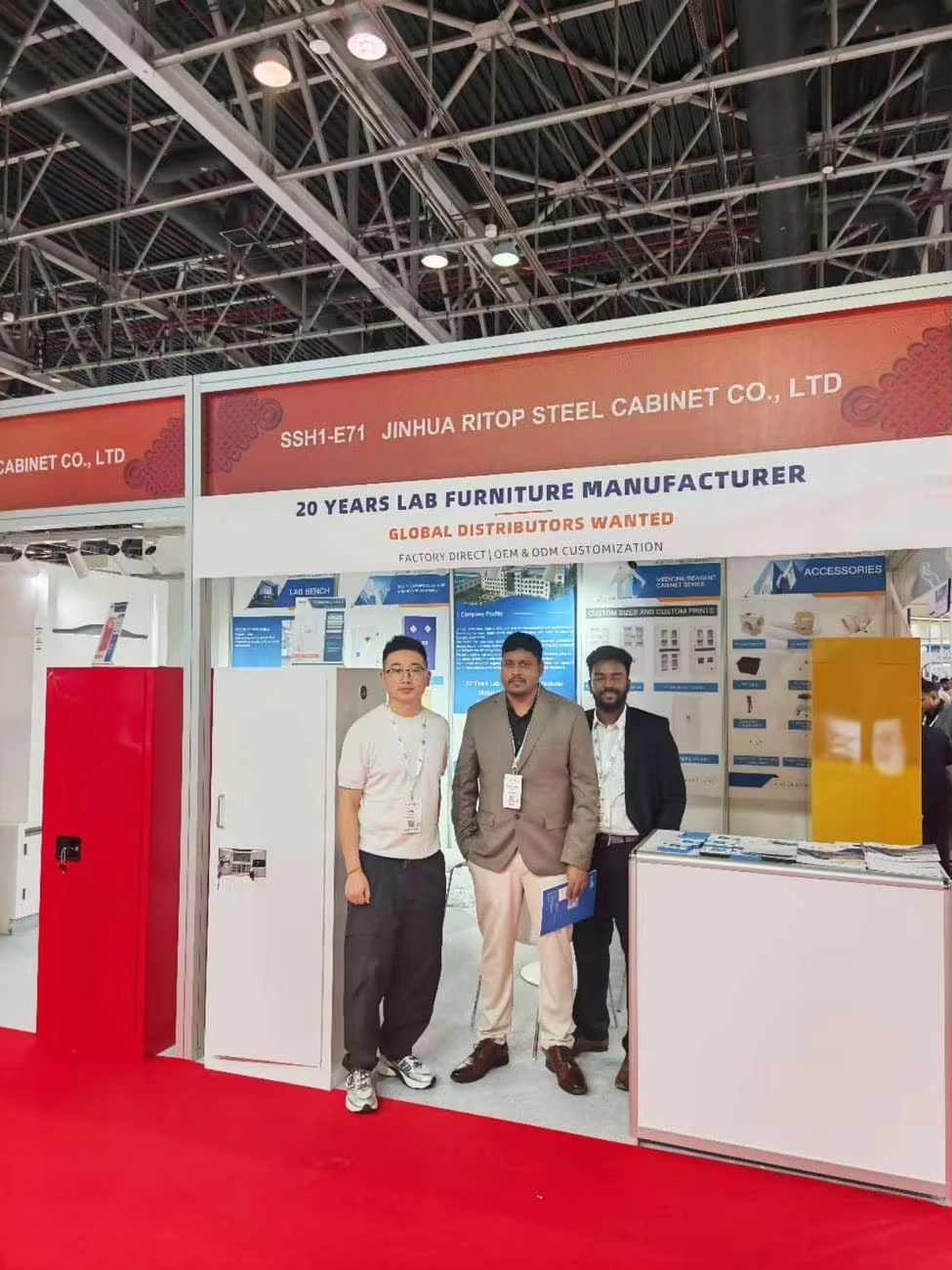
Booth SSH1-E71 at ARAB LAB LIVE 2026, Dubai World Trade Centre.
What Stood on SSH1-E71
| Model |
What it is |
The question it answers |
| P2 |
PP fume hood in 8-10 mm polypropylene |
Strong-acid work, and a chamber with no coating to fail |
| Drug cabinet |
Single door, keypad plus two mechanical keys |
Controlled drugs that must be traced to a named person |
| Industrial safety cabinet |
Double-wall steel with a self-closing door |
Flammable liquids stored inside the laboratory |
| Hazardous chemical storage cabinet |
Phosphated steel or one-piece PP body |
Acid and alkali storage next to the bench |
The Gulf is not a market where a fume hood is judged only on the datasheet. Air conditioning runs year round, fresh air is expensive to cool, and a laboratory that exhausts a cubic meter of conditioned air has to pay for the replacement twice. That changes which model a buyer should pick, and it is what the stand was organized around.
Why Ventilation Costs More Here
A laboratory ventilation system built on a ducted fume hood does two things at once: it removes contaminated air, and it removes cooled air with it. In a temperate laboratory the second cost is a line item. In Dubai, Riyadh or Doha it can be the largest running cost in the room, because every cubic meter the hood exhausts must be replaced by outside air that the air handling unit then cools and dehumidifies.
Three decisions follow from that, and all three were on the stand:
-
Match the airflow to the work, not to a fixed number. A fume hood running at a fixed high volume protects nobody better than one held at the correct face velocity, and it costs more every hour it runs.
-
Choose a chamber material that survives the local humidity. Coastal air plus hydrochloric acid is a hard combination for a coated steel chamber. Polypropylene has no coating interface to blister.
-
Plan the make-up air with the hood, not after it. Duct diameter, fan curve and the room's air balance decide whether a hood performs as tested in the room it is installed in.
The P2 PP Fume Hood
-
Face velocity held between 0.3 and 0.5 m/s. A streamlined collection chamber spreads the airflow across the whole opening instead of pulling a fast column up the center, so the working zone stays clear of eddies. The design follows the ASHRAE 110 containment approach, and the reading was taken at the sash for visitors rather than quoted from a sheet.
-
A chamber welded from polypropylene, with no seam inside. The body is built from 8 to 10 mm polypropylene sheet, cut on CNC and welded into a single shell, so there is no joint for acid to creep behind and no coating to repaint. It resists strong acids, alkalis and organic solvents, and it does not embrittle with age.
-
Control that watches the sash as well as the airflow. The touch controller tracks both, alarms when the sash passes its working height or the airflow drifts, and can be ordered with a variable-air-volume mode that follows sash position. Our own comparison puts the saving at roughly 30% against a constant-volume hood, which in a cooled building also cuts the make-up air load.
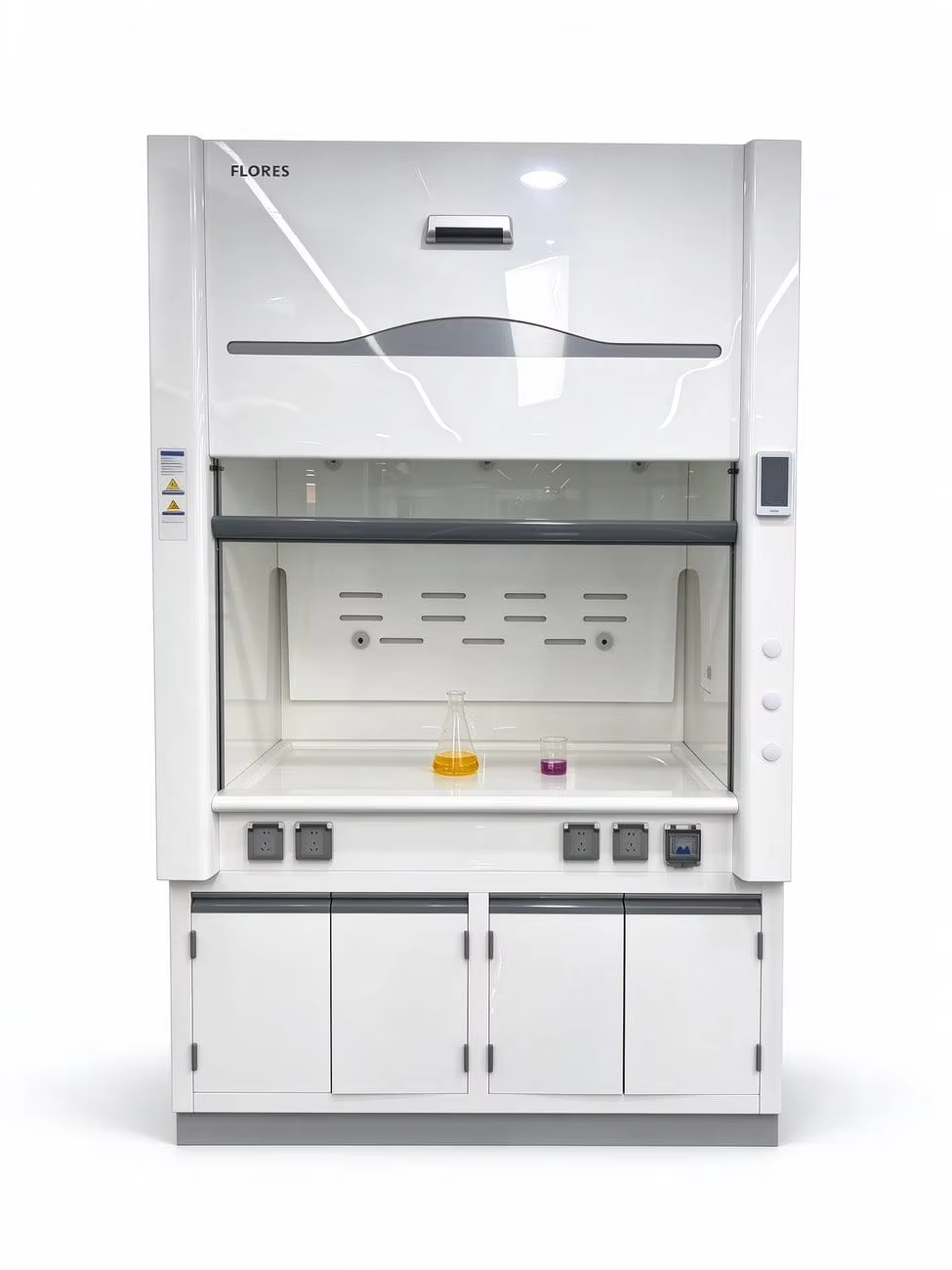
The P2 PP fume hood: an 8-10 mm polypropylene chamber welded into one shell.
The PP models, the steel models and the ductless units are listed together under Lab Fume Hood.
The Drug Cabinet: Two Keys, Two People, One Log
-
A keypad and two mechanical keys, working together. The electronic code and the mechanical lock both have to be released, and the two keys are held by different people, so no single operator can open the cabinet alone.
-
Tiered accounts and an audit trail. Access levels are set per person, and every opening is recorded with the time and the account that released it, which is what a controlled-drug inspection asks for.
-
A body built against force. Double-layer cold-rolled steel welded into one piece, a reinforced door frame and anti-pry hinges, finished with an epoxy powder coat that resists corrosion.
-
Alarm on disturbance. A vibration sensor triggers an audible and visual alarm on impact or prying, with an optional network output to a monitoring point.
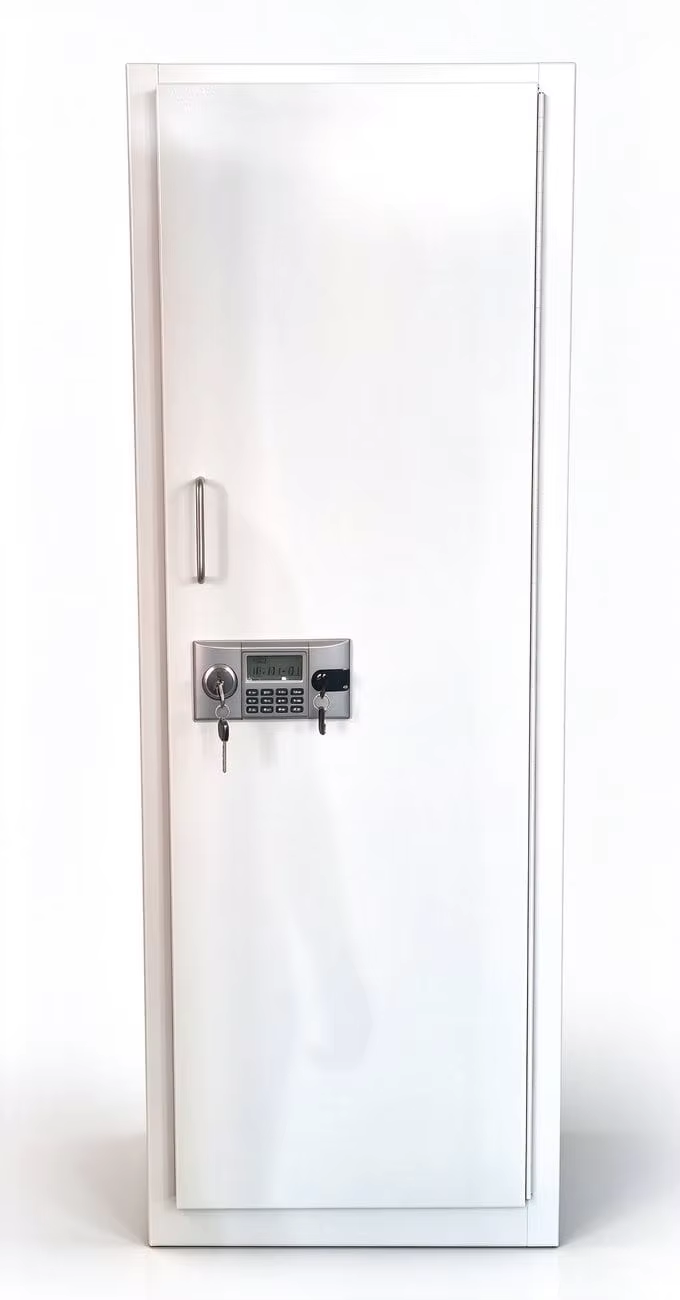
The drug cabinet: a keypad plus two mechanical keys, so two people must open it together.
Hazardous Chemical Storage: Two Cabinets, One Job
-
Double-wall steel with an air gap. In a hazardous chemical storage cabinet the cavity slows heat transfer and delays flame penetration, and the door returns itself under spring tension so a fire cannot leave it standing open. The layout follows NFPA 30 and OSHA flammable storage requirements.
-
A spill sump and flame-arresting vents. A one-piece tray in the base catches the contents of a failed container, and both sides carry vents with flame arresters that can be tied into external exhaust to pull flammable vapor out of the room.
-
A grounding terminal. A defined discharge point for the operator before solvent containers are handled, which removes a static ignition path.
-
Three-point locking, with a two-person option. The rods engage together for a tight seal, and the same body can be supplied with dual custody where the stored material requires it.
-
Labeling that travels. The hazardous chemical storage cabinet is supplied with hazard labels in English, Chinese and Arabic, which matters when the same cabinet serves a mixed workforce.
-
Two finishes for two duties. Phosphated steel with an electrostatic powder coat for general chemical storage, or a one-piece PP body for strong acids and alkalis.
-
A lab safety cabinet for every duty. The range also covers gas cylinders and controlled drugs, so one supplier can fill a storage room instead of one corner of it.
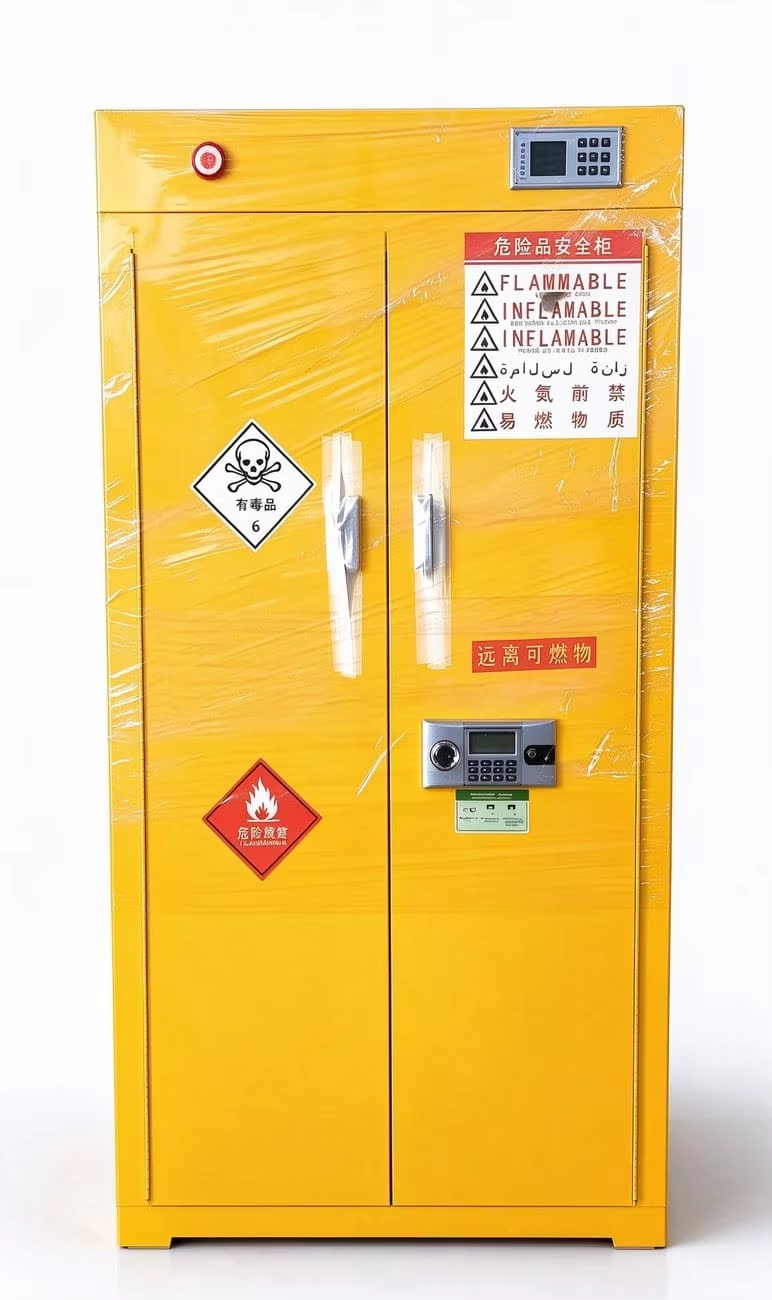
The hazardous chemical storage cabinet, labeled in English, Chinese and Arabic.
The range sits under Lab Storage Cabinet.
The Offer Behind the Stand: Scheme First
What buyers took away from booth SSH1-E71 was not only a product list:
-
Hazardous storage and laboratory ventilation scheme design, at no charge. A layout showing where each cabinet sits, how the room is ventilated and how the make-up air is handled, produced before an order rather than after one.
-
A drawing set. Product CAD drawings, a specification manual and the qualification documents, so a consultant can put the equipment into a tender package without redrawing it.
-
Show pricing. A quotation fixed for orders confirmed at the exhibition.
-
A regional route. Distributors and contractors in the Gulf who already carry lab furniture can discuss territory and OEM supply with the factory directly.
A turnkey laboratory in this region usually fails at the interfaces: the fume hood supplier, the cabinet supplier and the HVAC contractor each defend their own scope. Quoting the ventilation and the storage together, on one drawing, keeps those interfaces in one place.
What Visitors Asked
-
Whether the PP fume hood suits a coastal site. Yes, and it is often the reason the PP model is chosen over coated steel in humid, salt-bearing air.
-
Whether the cabinets can be delivered with Arabic labeling. Yes.
-
Whether the drug cabinet keys can be held by different departments. They can, which is how the two-person rule is enforced in practice.
-
Whether a mixed container is possible. Yes, hoods, cabinets and benches are made in the same group and load against one packing list.
-
Whether the scheme can follow a consultant's specification. Yes, with the drawing office working from either side's document.
FAQ
Which fume hood suits a hot, humid climate?
The P2 PP fume hood, because the chamber is polypropylene rather than coated steel, and because the optional variable-air-volume mode reduces both the exhaust volume and the make-up air that has to be cooled.
Can the storage cabinets be supplied with Arabic hazard labels?
Yes. The hazardous chemical storage cabinet is supplied with hazard labels in English, Chinese and Arabic.
Do you provide the ventilation design as well as the cabinets?
Yes. Storage and ventilation scheme design, layout drawings and the make-up air calculation are provided at quotation stage without charge.
Can you supply a complete laboratory, not only cabinets?
Yes. Fume hoods, storage cabinets and benches are made in the same group, so one order can cover the room.
Get Your Quote and Layout Drawing
If you visited booth SSH1-E71 and want the scheme we discussed, send the floor plan, the chemicals in use and the equipment list, and we will return a configuration, a layout and a quotation. If you did not attend, the same process applies. Contact our team to start.
Founded in 2012, Jinhua Ritop Steel Cabinet Co., Ltd. runs five workshops covering 80,000 square meters, with ISO 9001, ISO 14001 and ISO 45001 certification and more than 45 patents. Annual output is stated at 50,000 lab benches, 30,000 fume hoods and 25,000 storage cabinets.