Jinhua Ritop Steel Cabinet Co., Ltd., a laboratory furniture supplier based in Zhejiang, is running its P2 PP fume hood, a two-person drug cabinet and a wall of lab safety cabinets at analytica China 2026 in Shanghai, 16 to 18 November, Booth 1546. Every fume hood on the stand is live, so visitors can take the anemometer reading at the sash themselves and watch the face velocity hold.
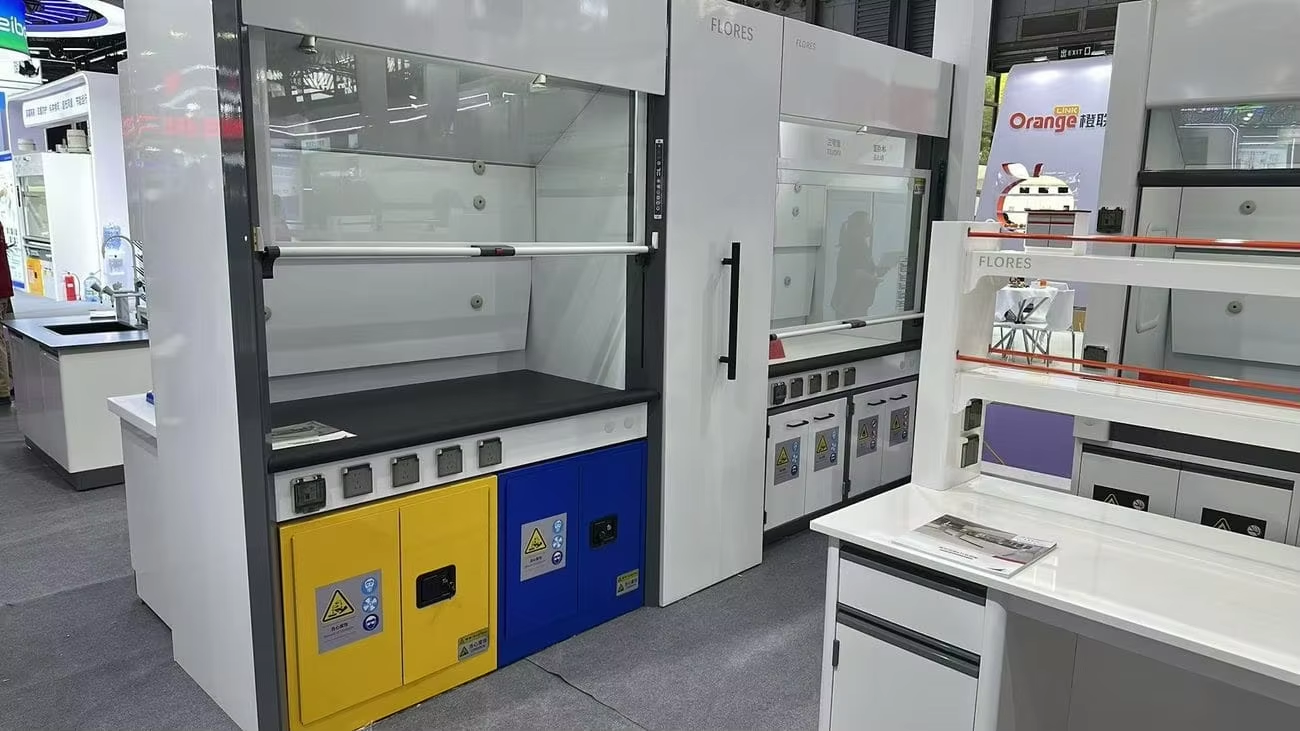
The P2 PP fume hood on the Ritop stand at analytica China 2026, with safety cabinets fitted below the worktop.
Four product groups carry the stand this year.
| Product on the stand | What visitors can do | Where it fits |
|---|---|---|
| P2 PP fume hood | Measure face velocity live through the open sash | Strong-acid digestion, trace-metal work |
| Drug cabinet | Try the dual-credential lock and read the access log | Hospital pharmacy, veterinary and university stores |
| Lab safety cabinet | Open the self-closing door, check the spill sump and vents | Flammable liquid and corrosive storage |
| All-steel lab bench | Walk a full bench run with sinks and reagent shelves | General, analytical and teaching benches |
The questions arriving at the booth have changed. Three years ago most overseas buyers opened with a request for a steel fume hood and a better coating. This year the first question is often whether the working chamber can be polypropylene, because the chemistry in the room has moved: hydrochloric, nitric and hydrofluoric acid digestions, solvent-heavy extraction, and trace-metal analysis where a trace of iron ruins the result.
A coated steel fume hood is still the right answer for general chemistry, and we build plenty of them. But once the acid load is constant, the coating turns into a maintenance item and the buyer ends up paying for recoating every few years. Polypropylene removes that cycle, because the chamber, the liner and the worktop are the same material and there is no interface to fail.
The second shift sits in controlled drugs. Hospital pharmacies, veterinary clinics and university stores are now asked to document not only where narcotics are kept but who opened the cabinet, when, and on whose authority. A lock alone no longer satisfies that question. The record does.
Visitors spend the longest time at the P2, mainly because we let them measure it instead of describing it.
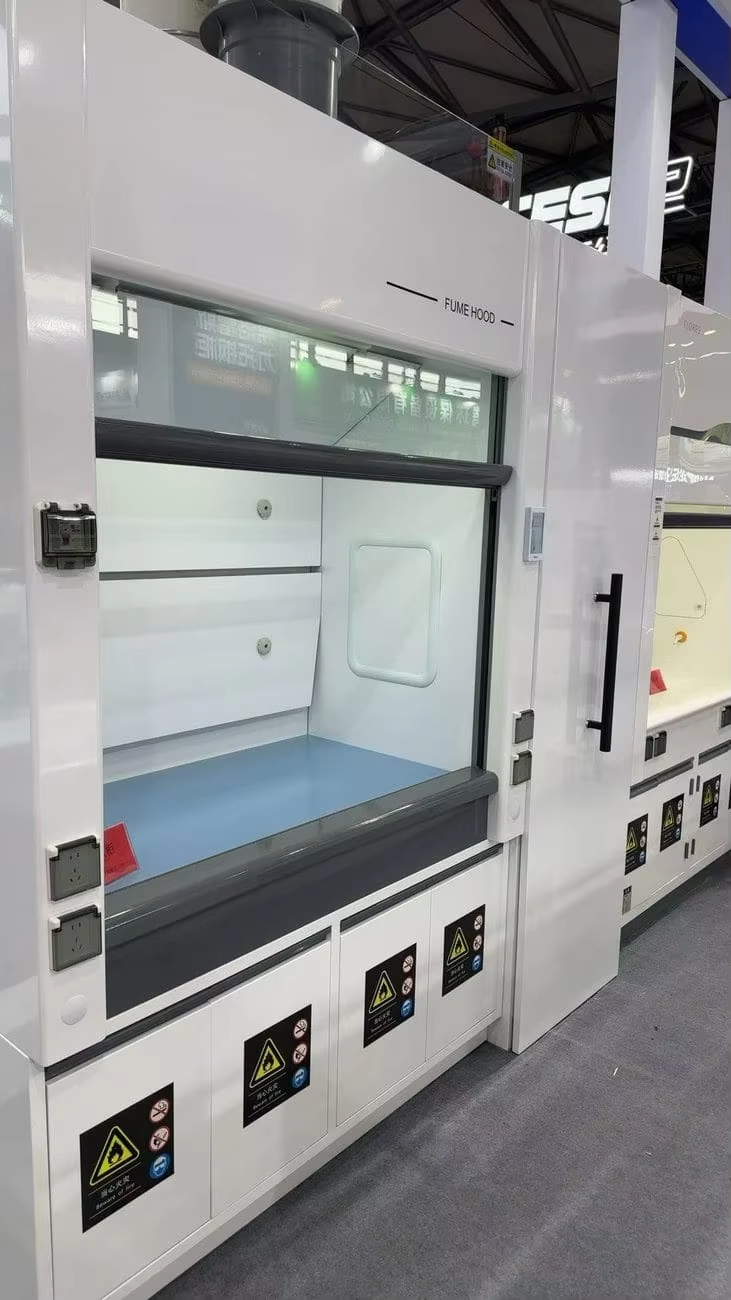
Inside the P2 PP fume hood: sash, seamless liner and the hazard-marked base unit.
Sizes, worktop options and ducting configuration for each fume hood are listed on the PP fume hood product page.
The ductless medicine cabinet on the stand addresses the audit question rather than the storage question, and it is the piece hospital buyers return to twice.
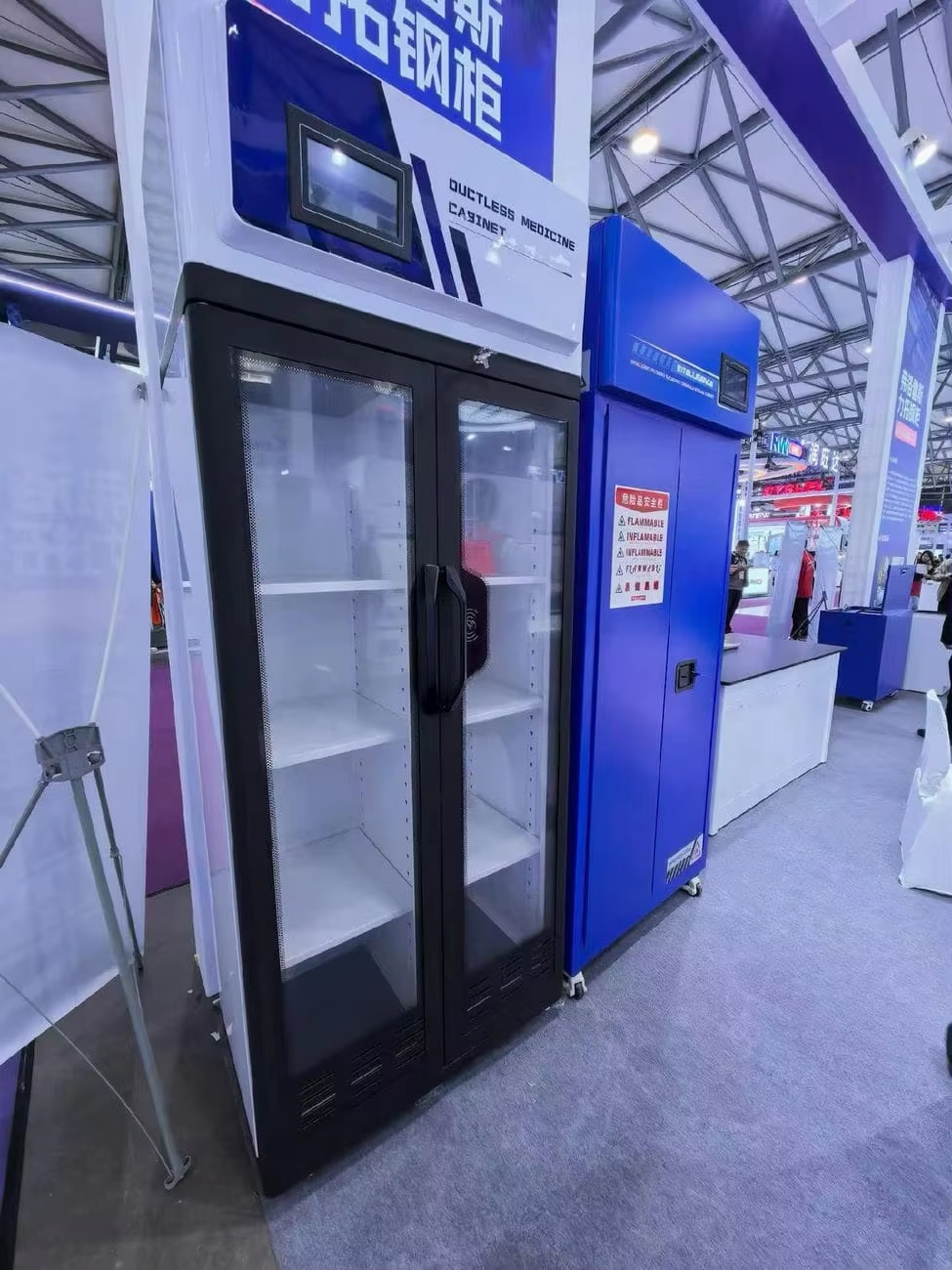
The ductless medicine cabinet and a flammable liquid safety cabinet, side by side on the booth.
Configuration and interior options for the PP drug cabinet are on the product page.
The yellow and blue cabinets flanking the PP fume hood apply the same logic to flammable liquids.
Capacity and door options for the flammable liquid safety cabinet range are listed separately.
Strong corrosives need a different enclosure from solvents, and buyers who run both usually want them side by side. The lab safety cabinet range is offered in two finishes for that reason: phosphated electrostatic powder coating for general chemical storage, and a one-piece PP body for hydrochloric, nitric and sulfuric acid service, where a coated steel panel would be the first thing to fail. Every lab safety cabinet in the range keeps the spill sump, the grounding terminal for static discharge, the three-point lock and the convection vent that balances internal pressure.
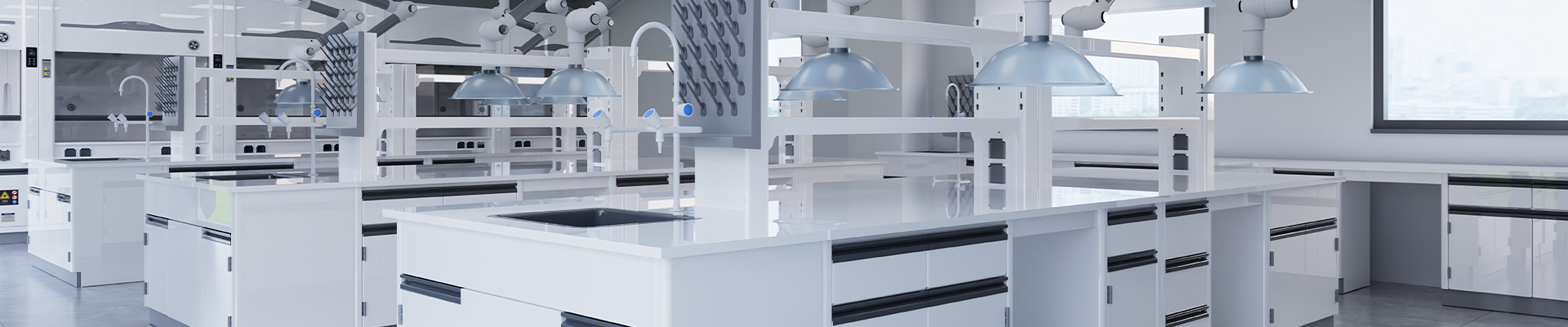
Behind the hoods, the stand carries a full bench run: steel frames with adjustable feet, a phenolic worktop, reagent shelves on service posts, and base units with drawers, cupboards and sinks. The all-steel lab bench remains the default for general and analytical benches, and the same run can be built in PP, stainless steel, steel-wood or wood, so the all-steel lab bench you see is one option in a five-material range.
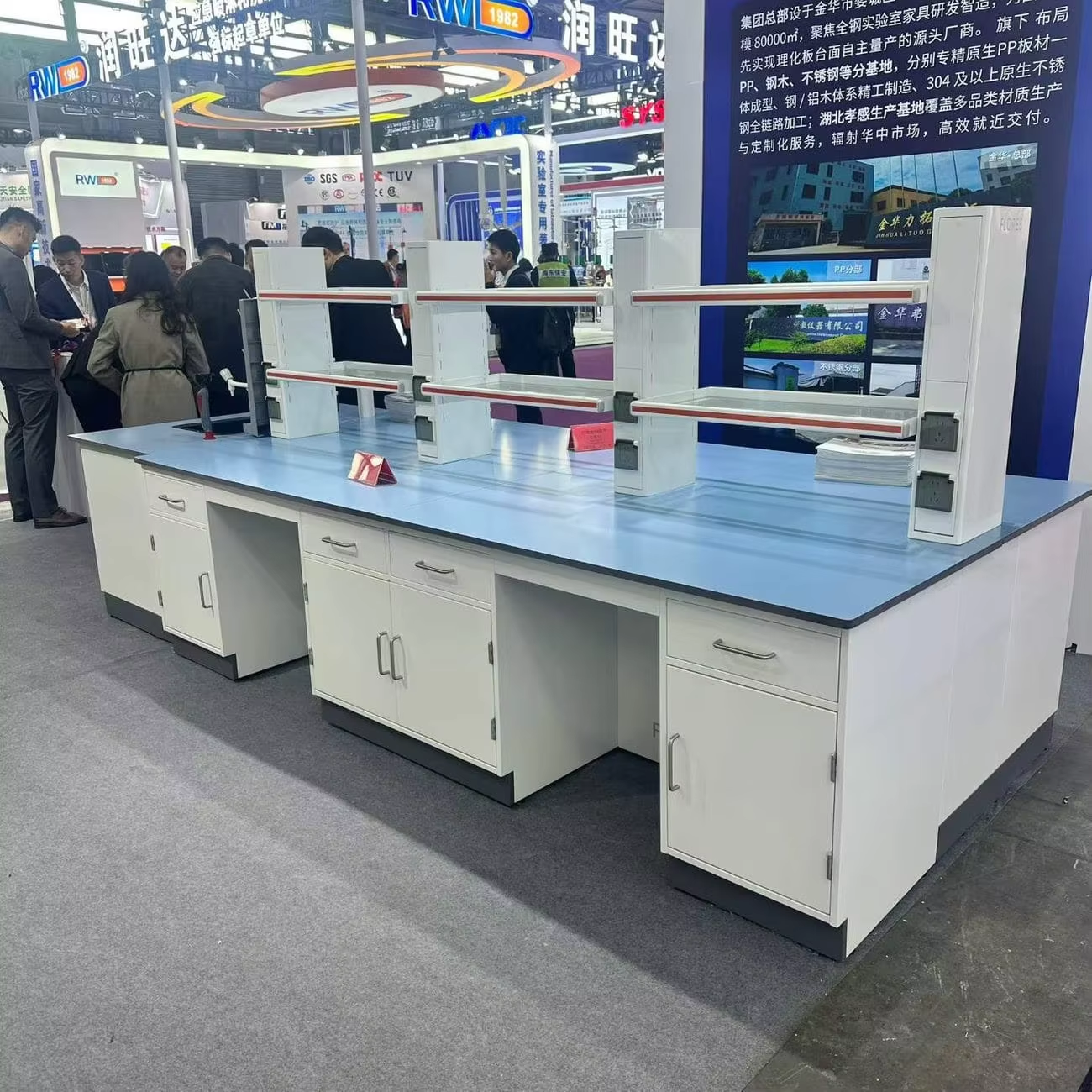
The all-steel lab bench run on the stand, with reagent shelves on service posts.
The bench sits beside the hood for a practical reason. Most projects we quote this year are turnkey laboratory fits rather than single cabinets: the buyer needs the hoods, the storage, the all-steel lab bench, the sinks and the ducting in one package with one installation plan. Because the workshops sit in the same group, that package comes from one supplier instead of three, and the drawing handed to the contractor already matches the equipment.
For constant strong-acid work, yes, and it removes the recoating cycle. For general chemistry with solvents and light acids, a coated steel fume hood is usually the cheaper choice, and we build both.
The P2 PP fume hood is set to work between 0.3 and 0.5 m/s, and the controller alarms if the reading drifts outside that band or the sash stays above its working height.
The dual-credential lock, tiered accounts and automatic opening log are designed to give an inspector a complete record of who opened the drug cabinet and when.
Because the hood, the hazardous chemical storage cabinet and the bench share a footprint in the same room. Ordering them together means one drawing, one delivery and one installation sequence.
The stand is open from 16 to 18 November at Booth 1546 in Shanghai. If you cannot attend, the same support applies by message: send the room size, the chemicals in use and the equipment list, and we will return a configuration, a layout drawing and a quotation. Contact our team to start.
As a laboratory furniture supplier working with distributors, contractors and end users, we would rather quote a room than a box, and the show is the fastest place to begin that conversation. Ask for the PP fume hood, the drug cabinet or the full bench run and we will price the three together.